
It's time to say goodbye to the Year of the Snake and usher in the Year of the Horse! Lunar New Year roars in on February 17th. The holiday traditionally lasts 15 days.
Each year of the lunar calendar is based on one of 12 animals: rat, ox, tiger, rabbit, dragon, snake, horse, sheep, monkey, rooster, dog, and pig. Each of the represented animals comes with unique traits that are indicative of what’s to come in the new year. It's also believed to represent personality traits in people born this year.
So what can you expect in the year of the horse?
The horse signifies action, freedom, speed, and breakthrough, representing a time for bold moves, forward momentum, personal growth, and independence, often with an emphasis on social connections and decisive action rather than hesitation.
 Sarah Pennell via Canva |
For those born: 1918, 1930, 1942, 1954, 1966, 1978, 1990, 2002, 2014
As per washington.edu, Horses are described as follows:
The sixth animal in the Chinese zodiac is the horse. Power, beauty, and freedom symbolize the horse in the Chinese culture. People born in the year of the horse are very high-spirited, active, and energetic. Their enthusiasm and cheerful personalities make people like them. That is why people who are born in the year of the horse like to be the center of attention and make everyone around them enjoy their company.
The horse's moods can change very quickly because they are quick-tempered and Impatient. The horse must have a lot of freedom and independence, so it is hard for them to adjust to a schedule prepared by someone else. They have a sharp and quick mind, which makes them good at identifying patterns and sense what you are thinking before you state it.
In China
Dragon dances, mooncakes, parades, fireworks, red envelopes... most of us are familiar with many of the traditions associated with Chinese New Year celebrations. Lunar New Year is a very big deal in China. Schools and businesses are closed for a whole week and millions of people travel to their hometowns to spend the holiday with family in what is often referred to as "the world's largest human migration." Red is considered a lucky color in Chinese culture, so you will see it in abundance during Lunar New Year festivities.
Speaking of red, those red envelopes, known as hong bao, contain money that is given by elders to children. While the traditional foods prepared and eaten during the Lunar New Year vary somewhat by region, jiaozi (dumplings), nian goa (rice cakes), and mandarin oranges are considered lucky foods.
How to celebrate Chinese New Year at home:
 Leung Cho Pan via Canva |
- Learn to say "Happy New Year" in Mandarin
- Try these kid-favorite recipes for jiaozi (dumplings), lo mein or spring rolls
- Make this adorable Chinese Dragon Puppet craft
- Watch a Chinese Dragon Dance performance and learn about its meaning
- Watch this kid-friendly video explaining the origins of Lunar New Year in China
In Korea
Korean Lunar New Year, called Seollal, is one of the most important national holidays in Korea, where families gather over three days — spanning from the day before Seollal to the day after — to pay respect to their ancestors, prepare and eat traditional foods, play folk games, and exchange gifts.
Eating rice cake soup (tteokguk) is an important part of the tradition, as Koreans believe everyone gets a year older on Seollal — but only if they eat their tteokguk! Kids look forward to performing a deep traditional bow (sebae) for their elder family members in exchange for blessings — and New Year's money!
How to celebrate Seollal at home:
 Getty Images via Canva
|
- Learn how to say "Happy New Year" in Korean
- Learn the proper way to bow on Seollal (sebae)
- Craft these fun Korean fans and drums and this origami Hanbok (traditional Korean dress)
- Learn how to make your own Yut Nori game, a traditional board game Koreans often play on Seollal
In Vietnam
Vietnamese New Year ("Tết") is the most important national holiday in Vietnam. Similar to Korean Seollal, Vietnamese people celebrate by returning to their home villages for big family reunions involving special holiday foods, decorations, games, ancestral worship, exchanging traditional New Year's greetings, bestowing lucky money on kids and elders, and purification rituals aimed at washing away the bad luck of the old year and welcoming the new year afresh.
Lunar New Year's Eve kicks off the celebrations with fireworks, dragon dances, and boisterous parades filled with rattles, gongs, drums, and bells meant to scare off evil spirits. The first day of Tết is the most sacred, celebrated with just close family. Family members dress up in new clothes, symbolizing a fresh start to the new year, and children receive a red envelope containing money from their elders. The following days are filled with visits with friends and extended family.
 DragonImages via Canva |
How to celebrate Tết at home:
- Learn how to wish someone a "Happy New Year" in Vietnamese
- Try this Mứt hoa quả (candied fruit) recipe, a favorite of Vietnamese children during Tết
- DIY your own Vietnamese nón lá ("leaf hat")
In Tibet
Tibet's Losar festival is steeped in their common Buddhist faith with an emphasis on continuous chanting of scripture to expel the evil demons that the Tibetan people believe exist everywhere, and praying for good luck and blessing for the coming year.
Families prepare for Losar by buying new clothes, thoroughly cleaning their homes to clear away the bad luck of the old year, and decorating with fragrant flowers and auspicious signs. The centerpiece of the home is the Losar altar, which is a basic Tibetan Buddhist shrine, but with additional items meant to invoke blessings and abundance for the New Year.
Fun fact: Because the Tibetan words for "sheep's head" and "beginning of the year" are similar, it is customary for families to make a sheep's head out of colored butter as a decoration! Losar festivities last several days and include gathering with family and friends, prayer ceremonies, exchanging gifts, eating traditional foods, and visiting local monasteries.
How to celebrate Losar at home:
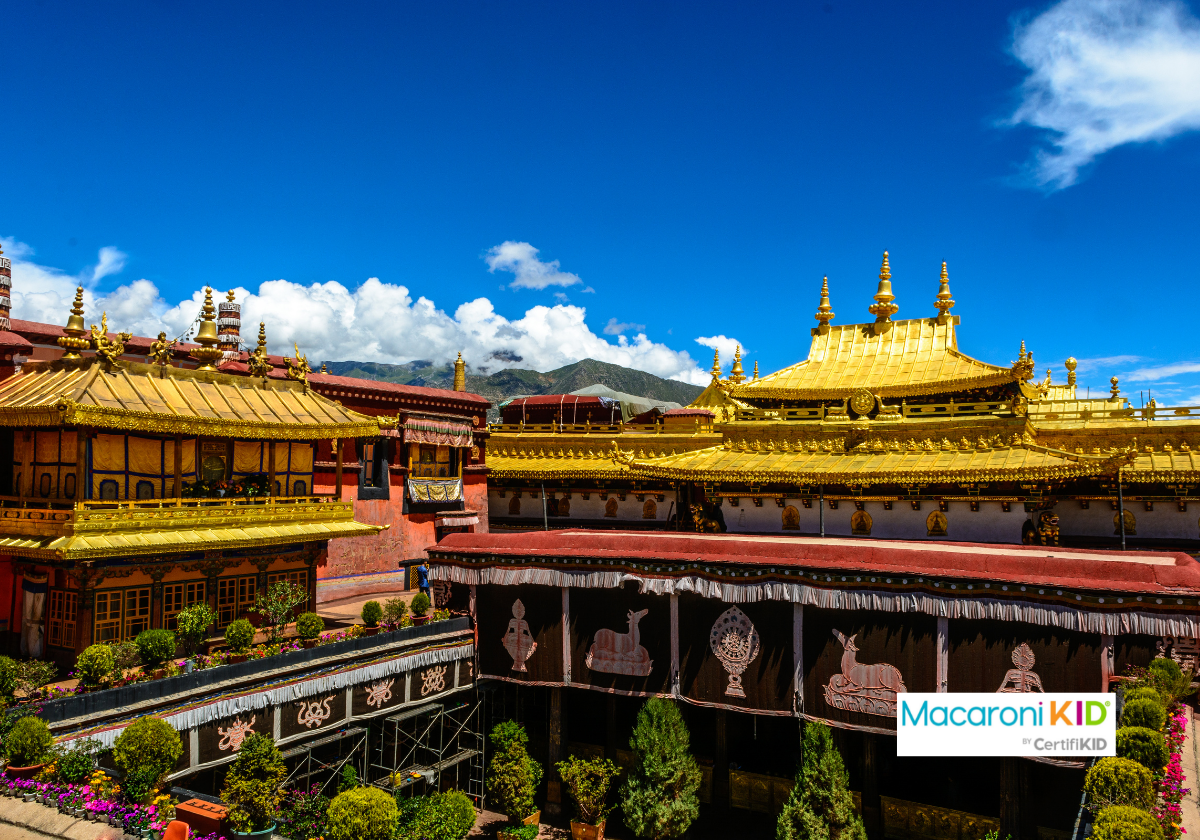 Getty Images via Canva
|
- Learn traditional Tibetan New Year's greetings
- Make khapse (deep fried pastries most often eaten during Losar) and momos (Tibetan dumplings)
- DIY your own Tibetan prayer flags
In Mongolia
Tsagaan Sar literally translates to "White Moon," and is Mongolia's most important national holiday. While Tsagaan Sar celebrations and customs have changed several times since the holiday was first established in the 12th century, modern festivities focus on family togetherness and unity, paying respect to elders, passing on Mongolian culture and traditions to the younger generation, and welcoming spring with an optimistic spirit and kind heart.
Similar to other cultures, Mongol New Year's preparations focus on cleaning their homes and bodies, with the belief that cleanliness ushers in good luck, and preparing traditional foods. Tsagaan Sar festivities officially last three days and involve visiting with family, friends, and neighbors; many special rituals; and lots of eating with an emphasis on white food, which symbolizes purification.
How to celebrate Tsagaan Sar at home:
- Learn Zolgokh, the traditional Mongolian greeting performed during Tsagaan Sar and seen in the video above.
- More than half of Mongols live in gers (yurts); watch this video to see how a ger is built
- Make a Mongolian girl's headdress craft
- Make Mongolian buuz (steamed dumplings) and suutei sai (milk tea)
Happy New Year! We hope you enjoyed this tour of Lunar New Year traditions
and have fun incorporating some into your own celebrations this year.
Don't forget to make these fun, Lunar New Year Crafts,
have your Red Envelopes ready,
and prepare your new Tray of Prosperity
or make fun crafts like the Chinese Shuttlecock
Be sure to tell local businesses and events you found them
on Macaroni Kid Greater Woodbridge
and make sure to tell all your friends!
 |  |  |  |  |